
Appearance
What Is Keyword Cannibalization and How to Fix It?
What Is Keyword Cannibalization and How to Fix It?
When SEOWILL displays the following warning:
This keyword is already used by another page. Multiple pages targeting the same keyword may compete with each other in search results.
it means another page in your store is already using the same Target Keyword.
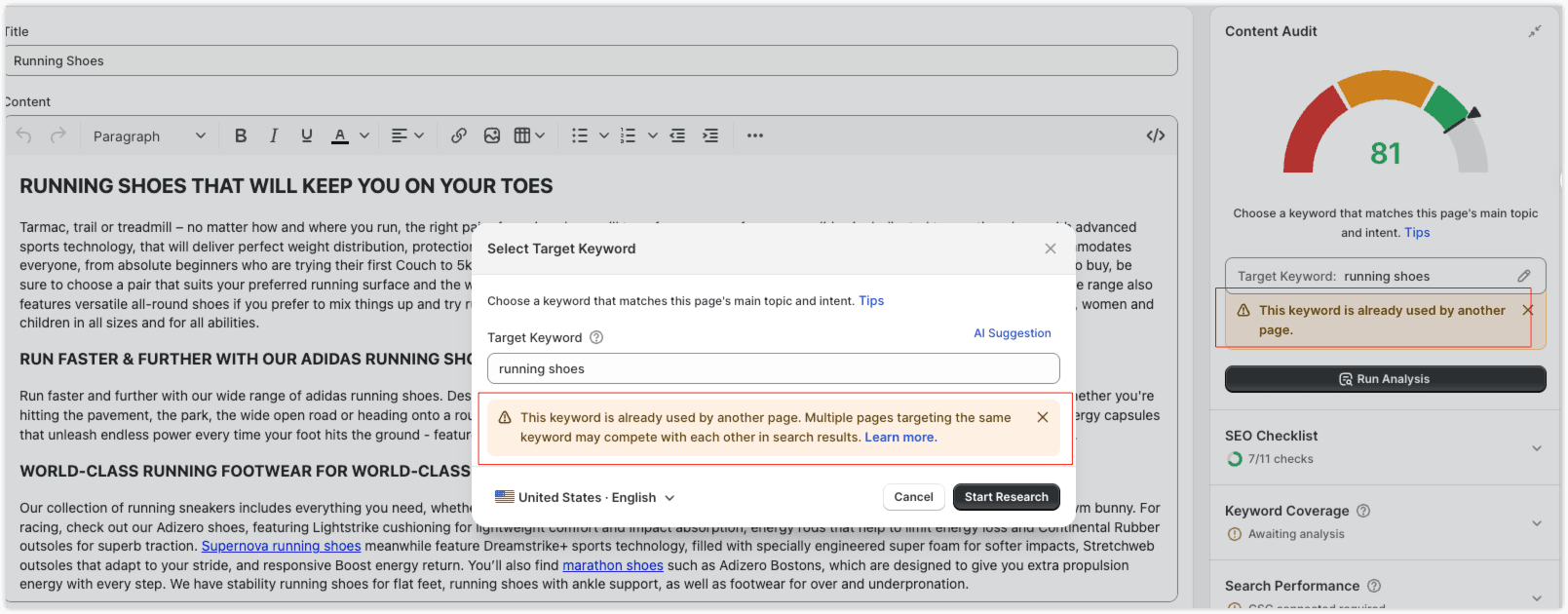
When multiple pages are optimized for the same keyword and search intent, they may compete with each other in search results. This is commonly known as keyword cannibalization.
Why Does Keyword Cannibalization Affect SEO?
When multiple pages target the same keyword, search engines may have difficulty determining which page is the most relevant. This can lead to:
- Pages competing against each other in search results
- Ranking signals and authority being split across pages
- Your most important page ranking lower than expected
- Ranking and traffic fluctuations
However, not every duplicate keyword causes keyword cannibalization. Competition is more likely to occur when multiple pages target the same search intent.
How to Fix Keyword Cannibalization
1. Analyze the Search Intent Behind the Keyword
SEOWILL analyzes the top 20 Google search results for your keyword and identifies:
- The dominant page type (Product, Collection, Blog, etc.)
- The search intent behind the keyword
For example, for the keyword women's sports bras, SEOWILL found that approximately 75% of the top 20 search results are Collection Pages.
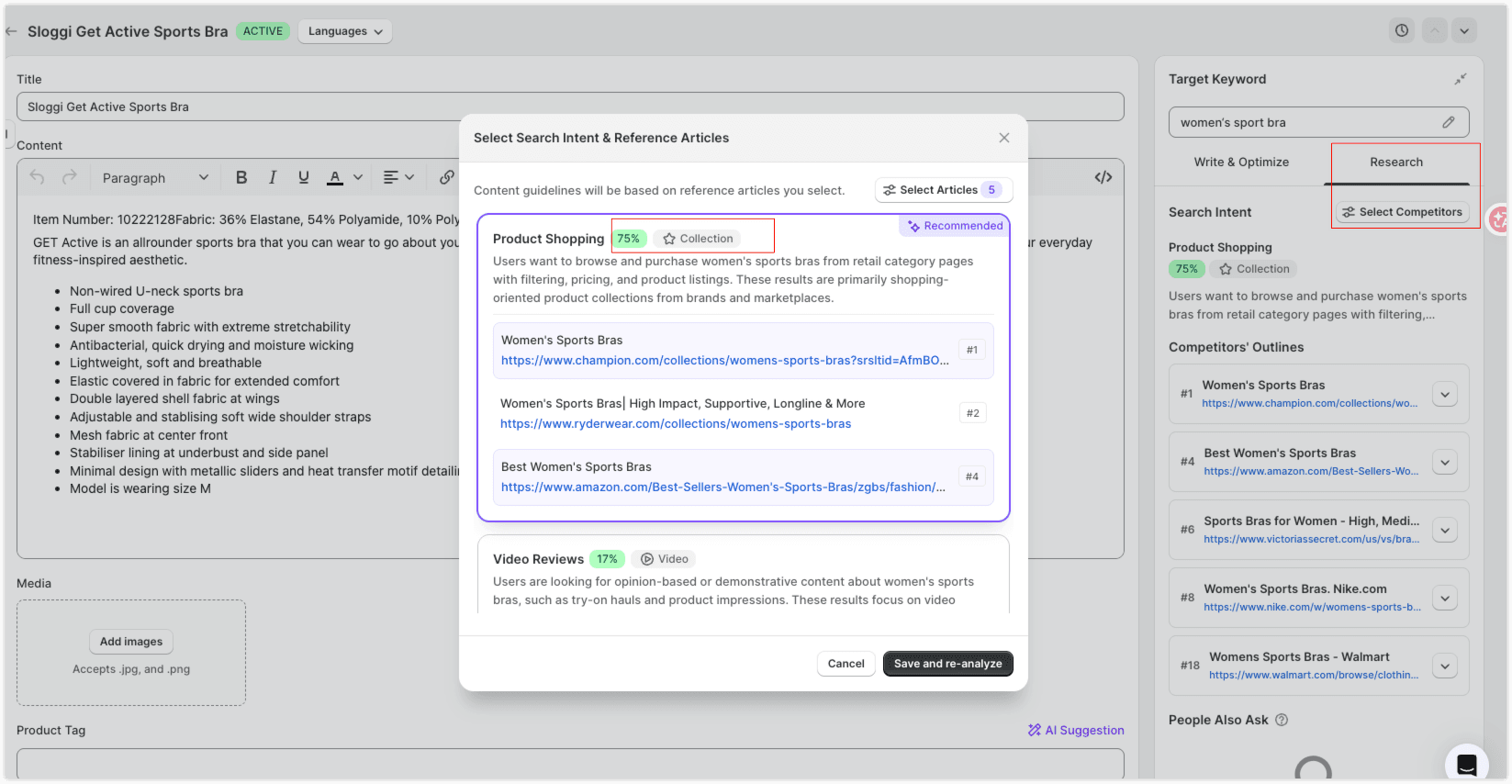
This indicates that Google primarily treats women's sports bras as a collection page keyword. Users are generally looking to browse, filter, and compare different sports bras rather than purchase a specific product.
2. Keep the Keyword on the Page That Best Matches the Search Intent
Suppose your store contains the following pages:
| Page | Primary Keyword |
|---|---|
| Collection | women's sports bras |
| Product | women's sports bras |
In this case, we recommend keeping women's sports bras on the Collection page because it matches Google's current search results.
For the Product page, use a more specific keyword instead, such as:
- quick drying sports bra
- full coverage sports bra
- adjustable sports bra
This gives each page a unique ranking target and helps reduce keyword competition.
3. What If Two Pages of the Same Type Use the Same Keyword?
If two pages of the same type use the same Primary Keyword—for example, two Collection pages targeting women's sports bras—they can still compete with each other.
We recommend keeping the keyword on the page that:
- Best matches the topic
- Contains the most complete product selection
- Already has stronger rankings or traffic
Then assign a more specific long-tail keyword to the other page.
For example:
| Page | Recommended Keyword |
|---|---|
| Sports Bras Collection | women's sports bras |
| High Support Sports Bras Collection | women's high support sports bras |
This helps each page target a different search need while reducing keyword competition.
4. How to Choose Keywords for Other Pages
Match Keywords to Different Search Intents
Even if multiple pages mention women's sports bras, they usually won't compete if they satisfy different search intents. For example:
| Page Type | Recommended Keyword | Search Intent |
|---|---|---|
| Collection | women's sports bras | Browse all women's sports bras |
| Product | Nike Indy Sports Bra | Purchase a specific product |
| Blog | how to choose sports bras | Learn how to choose the right sports bra |
By optimizing each page for a different search intent, search engines can better understand the purpose of each page.
Prioritize Long-Tail Keywords
Long-tail keywords are more specific and often describe a product, brand, feature, or use case. They better match user intent and help reduce keyword competition between pages.
For example:
| Instead of | Use |
|---|---|
| women's sports bras | women's high support sports bras |
| women's sports bras | Nike women's sports bras |
| women's sports bras | sports bras for running |
| women's sports bras | padded sports bras |
For Product pages, use keywords that include the brand, product name, model, or key features whenever possible.
For Collection pages, broader category keywords are generally more appropriate.
This approach gives each page its own optimization target while helping your store rank for a wider range of search queries.