
Appearance
What is AMP and how does it work
What is AMP and how does it work
AMP (Accelerated Mobile Pages) is an open-source framework developed by Google to help websites load faster on mobile devices. It focuses on improving page speed and performance, delivering a smoother and more responsive experience for mobile users.
How AMP Works
AMP creates a lightweight, mobile-optimized version of a webpage by:
- Using simplified HTML structures
- Restricting JavaScript usage
- Optimizing how resources (images, scripts, fonts) are loaded
These limitations allow AMP pages to load almost instantly, even on slower mobile networks.
AMP URLs and Indexing
When AMP is enabled:
- Google generates and indexes a separate AMP version of your page
- AMP pages often use a different URL structure (such as URLs containing /amp)
- Google may serve AMP pages directly from its cache, improving load speed for mobile users
This pre-rendering and caching process helps deliver content faster and more reliably.
AMP and Shopify
For AMP pages to function properly on a Shopify store:
- AMP pages must stay connected with Shopify’s data structure
- Product, collection, and page content must remain synchronized between the original pages and AMP versions
Without proper integration, AMP pages may display outdated or incomplete information.
How to Enable AMP in SEOWILL
Turn on the AMP switch in SEOWILL.
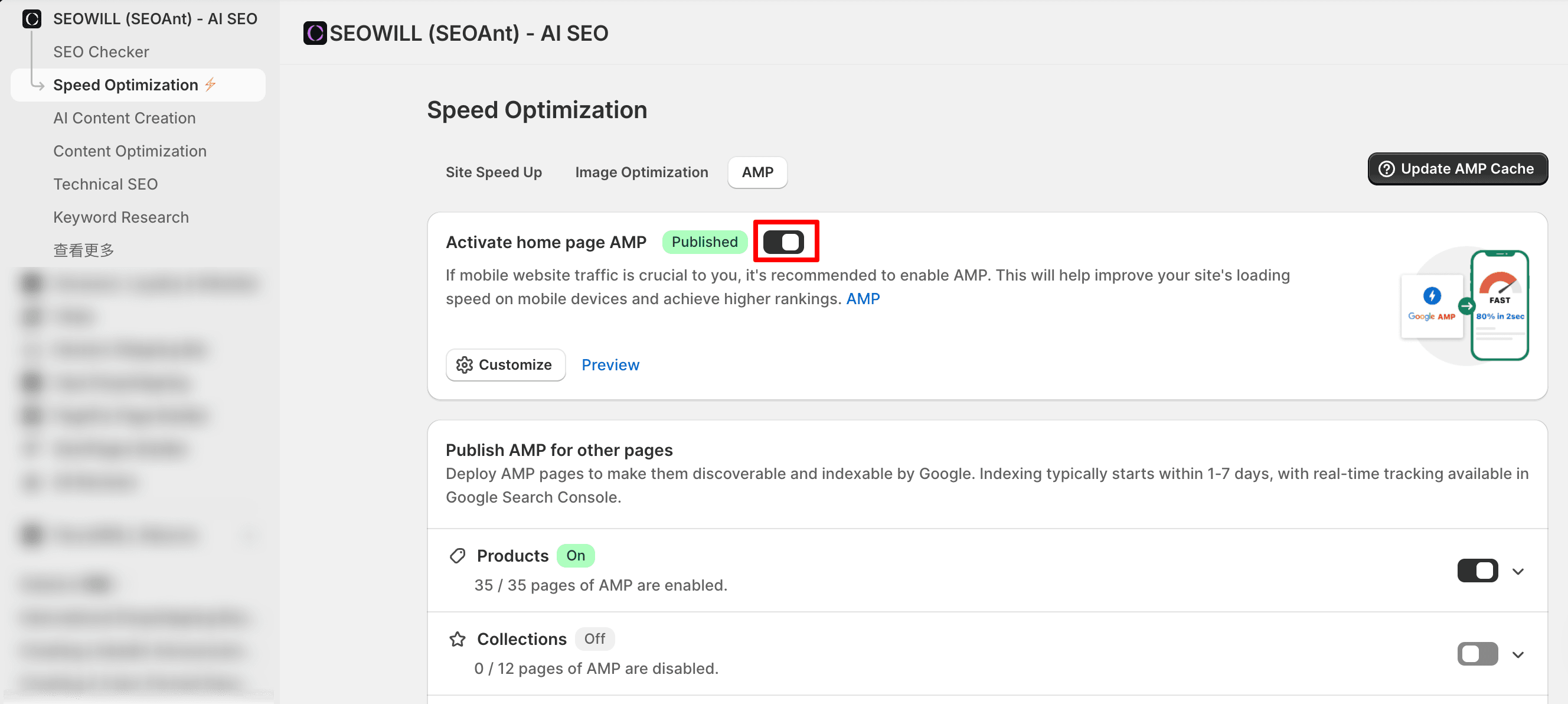
SEOWILL will begin loading your store data for the first time.
Enter the page configuration for your homepage display.
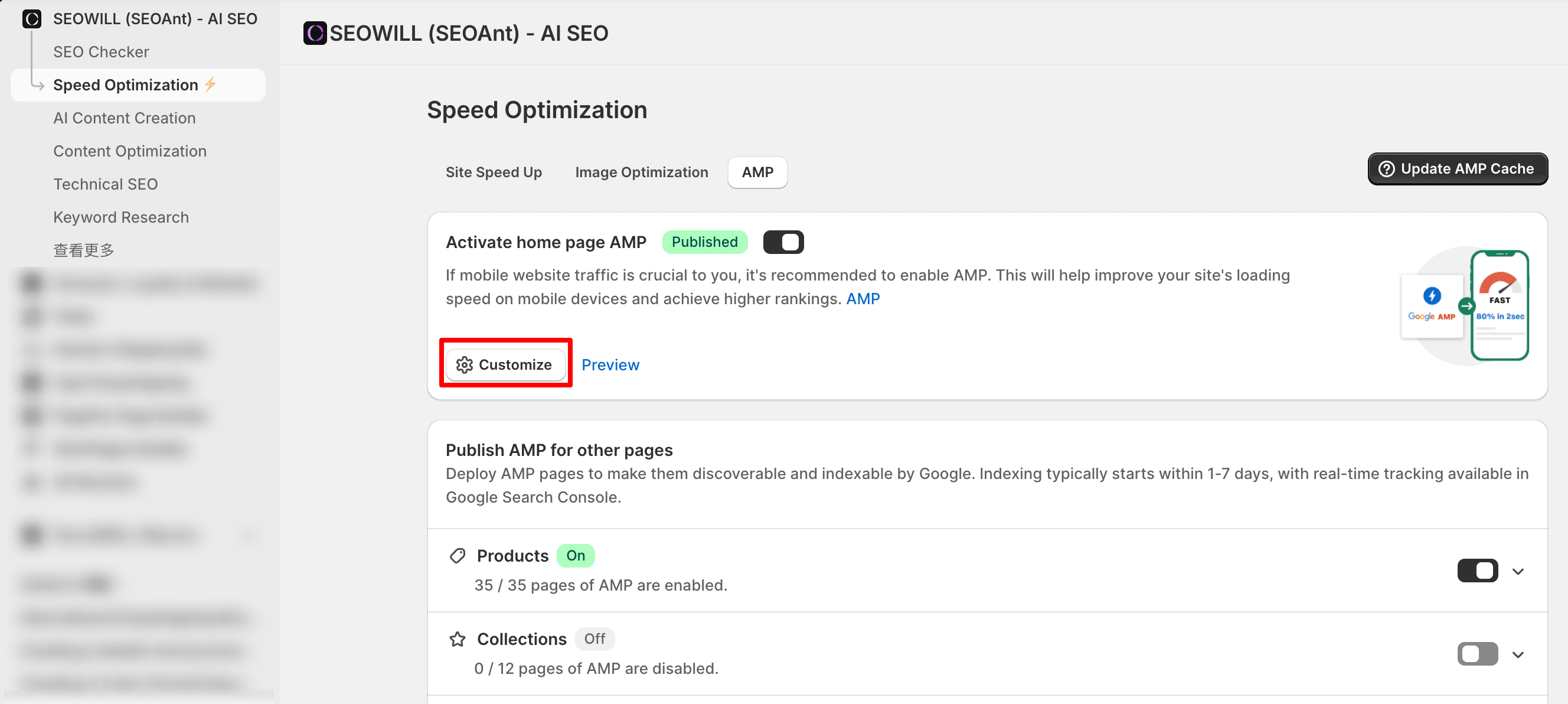
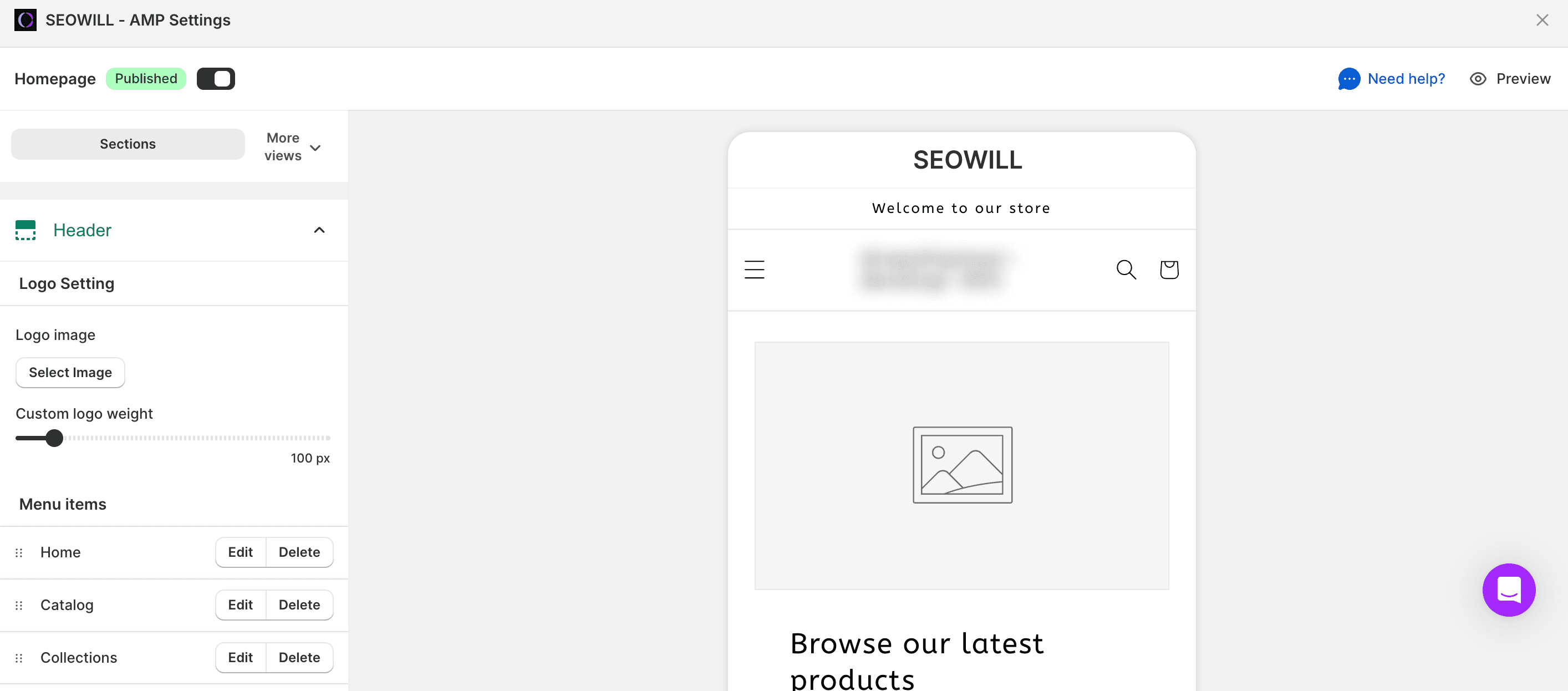
Save the settings.
Preview the AMP page to confirm everything displays correctly.
Once enabled, AMP pages will be generated automatically based on your configuration.
How Is AMP Different From Regular Web Pages?
Compared to regular web pages, AMP pages:
- Use a simpler HTML structure
- Restrict custom JavaScript
- Apply built-in resource loading optimizations
These differences significantly improve loading speed and provide a better mobile browsing experience.
What Impact Does AMP Have on SEO?
AMP can positively affect SEO by:
- Improving page loading speed
- Enhancing mobile user experience
- Reducing bounce rates caused by slow-loading pages
While AMP itself is not a direct ranking factor, better performance and user engagement can contribute to improved search visibility over time.
Which Pages Are Suitable for AMP?
AMP is best suited for mobile-focused pages that benefit from fast loading, including:
- Product pages
- Collection pages
- Blog posts
- Article and content pages
These page types often receive high mobile traffic and can benefit most from AMP optimization.
If you have any questions about enabling or configuring AMP in SEOWILL, feel free to contact SEOWILL Support Team.